
You’re about to place an AliExpress order and you’re wondering whether it’s going to cost more than the checkout total once it arrives. A customs bill you didn’t budget for can turn a bargain into something that barely made sense.
The good news: most AliExpress buyers in the US, UK, Canada, and Australia pay nothing extra at the border for typical orders. But the thresholds differ significantly by country, and knowing yours in advance is the difference between a pleasant surprise and an unexpected fee on delivery.
Quick answer
The amount you can import without paying tax or duty varies by country. In the US, individual orders under $800 are duty-free. In the UK, VAT applies to all imports, but orders under £135 have VAT collected at checkout so there’s no bill at the border. In Canada, the duty-free threshold is just C$20, which most orders exceed. In Australia, GST applies to all imports but AliExpress collects it at checkout for most purchases. The rules differ significantly, and Canada is the market where buyers are most likely to face unexpected charges.
What “tax-free” actually means for AliExpress imports
Every country has a threshold below which individual imports are waved through without customs assessment. This is called the de minimis threshold. Below it, customs authorities don’t bother collecting duty because the administrative cost of doing so exceeds the revenue it would generate.
Above the threshold, import duties and taxes apply at rates that vary by product category and country.
There’s an important distinction between import duty (a percentage tax on certain goods based on their category) and consumption tax (VAT in the UK, GST in Australia and Canada). These are different charges and have different thresholds.
AliExpress has also changed how taxes are handled in some markets. In the UK and Australia, AliExpress now collects consumption tax at checkout for eligible purchases, meaning the tax is paid before your package arrives and there’s no bill at the border. This has meaningfully improved the buyer experience in those markets.
Country-by-country: the exact thresholds
United States: $800 de minimis threshold
The US has one of the most generous import thresholds in the world. Individual orders valued at $800 or less are imported duty-free under the de minimis rule. No formal customs entry is required and no duty is assessed.
For context: a $300 gadget, a $150 clothing order, a $500 electronics purchase: all under $800, all clearing without duty in normal circumstances.
Above $800, formal customs entry is required and duty applies at rates that vary by product category. For most consumer goods the rates are 0 to 25%, but some categories affected by US-China trade disputes carry higher rates.
There are also some important caveats. The Biden and Trump administrations both explored changes to de minimis rules specifically targeting China-origin goods. As of 2026, the policy landscape for the $800 threshold has been evolving. For large individual orders, it’s worth checking current CBP rules rather than relying solely on the historical $800 figure.
Practical reality for most buyers: the overwhelming majority of AliExpress orders are well under $800 and clear customs without any duty or tax. Most buyers in the US pay exactly what AliExpress charged them, nothing more.
Payment and delivery: standard US payment methods (Visa, Mastercard, PayPal) work without friction. USPS handles most final deliveries.
United Kingdom: £135 VAT threshold, zero duty-free threshold
Post-Brexit, the UK changed how imports are taxed. The key thresholds are:
Under £135: VAT (currently 20%) is supposed to be collected at the point of sale, not at the border. AliExpress collects VAT at checkout for most purchases in this range, which means the checkout price you see already includes UK VAT. No bill at the door.
Above £135: VAT is collected at the border by the carrier. Royal Mail charges an £8 handling fee on top of the VAT amount. Courier services often charge more for this service. So for a £200 order, you’d pay £40 in VAT plus £8 handling (Royal Mail) or similar on delivery.
Import duty: applies on top of VAT for some product categories when the value exceeds £135. Most everyday consumer goods attract 0 to 12% duty. Clothing and footwear can be higher. Electronics accessories typically attract low or zero duty.
The effective duty-free threshold in the UK is much lower than in the US. Below £135 with VAT collected at checkout, the price you pay is the all-in price. Above £135, you’re paying more at the door.
Practical reality for most buyers: keeping individual AliExpress orders under £135 avoids border collection and the handling fee. Many UK buyers split what might otherwise be a single larger order into multiple orders under this threshold, each with VAT handled at checkout.
Canada: C$20 de minimis threshold
Canada has the lowest threshold of the four markets: just C$20. Almost any AliExpress order above a trivial value triggers potential duty assessment.
Under C$20: no duty, no GST/HST.
Above C$20: federal GST (5%) and provincial sales taxes apply, plus import duty at rates varying by product category. The total tax bill on a C$50 order is typically C$7 to C$12 depending on province and product.
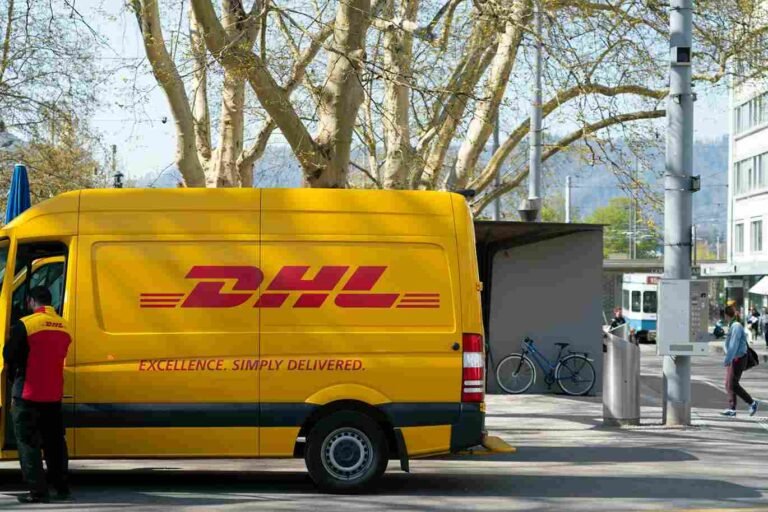
The additional complication for Canadian buyers: brokerage fees. When express couriers (DHL, FedEx, UPS) handle customs clearance on your behalf, they charge a brokerage fee for doing so, sometimes $20 to $35 on top of duty and taxes. Canada Post doesn’t add this brokerage fee, which is why experienced Canadian AliExpress buyers often choose Canada Post shipping over courier options.
In practice, many low-value packages shipped via Canada Post do clear without a customs bill, even above the C$20 threshold, because the Canada Border Services Agency doesn’t assess every package. But this isn’t guaranteed and buyers shouldn’t rely on it for budgeting.
Practical reality for Canadian buyers: factor potential duty into every AliExpress purchase above C$20. For orders under about C$100, the duty is manageable. For larger orders, calculate the landed cost including duty before deciding whether AliExpress’s price advantage still holds.
Australia: 10% GST on all imports, collected at checkout
Australia changed its GST rules for imported goods in 2018, requiring offshore sellers with more than A$75,000 in annual Australian revenue to collect and remit GST. AliExpress comfortably exceeds this threshold.
For most AliExpress purchases in Australia, GST (10%) is collected at checkout. The price you see at the end of the AliExpress checkout process includes GST. No bill at the door for most purchases.
Over A$1,000: formal customs entry is required. Import duties may apply depending on the product category, in addition to GST. Most everyday consumer goods attract low or zero duty. Some categories like footwear and clothing carry higher rates.
The exception is sellers who don’t collect GST (non-compliant or smaller third-party sellers). In these cases, Australian Border Force may hold the package pending tax collection. This is less common on AliExpress proper but can occur.
Practical reality for Australian buyers: most AliExpress orders are tax-inclusive at checkout. The total you pay AliExpress is the total you pay. No surprise bills for most orders under A$1,000.
How risky is this, really?
For US buyers: very low risk of customs surprises. The $800 threshold covers most consumer purchases.
For UK buyers: predictable if you understand the £135 threshold. Keep orders below it and tax is handled at checkout. Above it, budget for VAT plus handling.
For Canadian buyers: the most unpredictable situation. Factor potential duty into your purchase math every time.
For Australian buyers: low risk for most purchases because GST is collected at checkout. Higher-value orders over A$1,000 need more attention.
What to do: managing import taxes on AliExpress
- Know your country’s threshold before you place any order. US: $800. UK: £135 for VAT collection point. Canada: C$20 (but assess everything practically). Australia: GST collected at checkout for most orders.
- For UK buyers: keep individual orders under £135 where possible. Multiple smaller orders each have VAT collected at checkout. One large order above £135 triggers border collection plus a handling fee.
- For Canadian buyers: use Canada Post shipping, not DHL or FedEx. Canada Post doesn’t charge brokerage fees for customs clearance. DHL and FedEx do, adding $20 to $35 on top of duty and taxes.
- For Australian buyers: confirm GST is shown in your checkout total. It should be for most AliExpress purchases. If the price seems lower than expected, check whether tax is included.
- Calculate your total landed cost before comparing AliExpress to local retailers. Product price plus shipping plus estimated duty and tax is the number to compare, not just the product price.
- For US buyers: check current de minimis rules if placing a large order. US policy on Chinese goods imports has been actively changing. Verify current CBP rules for orders above $500 before assuming the old $800 threshold still applies in full.
- Keep your order confirmation in case of customs queries. If a package is held at customs with questions about declared value or product category, your receipt confirms what you actually paid.
Tips for minimizing customs costs on AliExpress
In the UK, use AliExpress Choice sellers for sub-£135 orders. Choice sellers typically collect VAT properly at checkout. Non-Choice sellers from smaller stores are more likely to have tax collection inconsistencies that could create problems on arrival.
In Canada, batch multiple small purchases into a single order only when the total stays well under the duty assessment range you’ve budgeted for. Splitting orders doesn’t help below C$20 per item since duty still applies if assessed. But knowing your total landed cost upfront prevents surprises.
In the US, use the Harmonized Tariff Schedule for expensive purchases. The US International Trade Commission provides a free lookup tool for duty rates by product category. For a $600 purchase, knowing whether the duty rate is 0% or 15% is worth five minutes of research.
For all markets: prefer sellers who are explicit about tax handling. Some AliExpress listings note that tax is included or that the seller handles import documentation. This is more common with Choice sellers and official brand stores.
Don’t count on customs not noticing. Some buyers rely on packages slipping through unchecked. This works often enough to create false confidence. Customs enforcement is inconsistent but not nonexistent. Budget for the tax and treat it as a pleasant surprise when you’re not charged, not as your default plan.
Monitor policy changes in your market. Import tax rules for Chinese goods specifically have been an active policy area in the US and UK. What’s true in 2025 may have changed by the time you’re reading this. For large purchases, verify current rules through your country’s official customs authority website.
Takeaway
Most AliExpress buyers pay no extra at the border. US buyers benefit from the high $800 threshold. Australian buyers have GST handled at checkout. UK buyers under £135 are fine at checkout. Canadian buyers face the most complexity.
The key is knowing your country’s rules before you buy, not after the package arrives. Calculate your landed cost, choose Canada Post in Canada to avoid brokerage fees, and keep UK orders under £135 where possible. Do those things and customs goes from an anxiety to a predictable line item you’ve already accounted for.
FAQ
Do I have to pay customs on every AliExpress order? No. In the US, orders under $800 are customs-free. In Australia, GST is collected at AliExpress checkout for most purchases, so no border charges. In the UK, orders under £135 have VAT at checkout. Canada is the exception: duty can apply above C$20.
How much is the import duty on AliExpress purchases? It varies by country and product category. In the US, most consumer goods attract 0 to 25%. In the UK, 0 to 12% is typical for consumer goods above £135. In Canada, rates vary by product. In Australia, most everyday goods attract low or zero duty above A$1,000.
Does AliExpress collect VAT or GST at checkout? In the UK (for orders under £135) and Australia (for most orders), yes. AliExpress collects the relevant consumption tax at checkout so buyers don’t face a border bill. Canadian GST is generally not collected at checkout by AliExpress.
What happens if my AliExpress package is held at customs? The carrier notifies you and explains what’s needed. Usually it’s either documentation of what was purchased or payment of outstanding tax. Most holds resolve within a few days. Keep your order confirmation in case you need to provide evidence of the purchase price.
Is it worth splitting a large AliExpress order to avoid customs? In the UK, splitting one order above £135 into two under £135 can save the handling fee and moves VAT collection to checkout. In other markets, splitting doesn’t change the per-order duty calculation. The benefit is UK-specific.
Why did I get a customs bill even though my order was small? In Canada, the threshold is C$20. Orders above that can be assessed. In the UK, orders above £135 are assessed at the border. In Australia, if the seller didn’t collect GST at checkout (less common on AliExpress), the border may hold the package.
Do customs fees affect my AliExpress buyer protection? No. Customs fees are separate from the purchase transaction. AliExpress buyer protection covers non-delivery and items not as described. Customs fees are a government charge unrelated to seller performance or platform protection.
Help a Friend Save Money: