
You’ve found something on AliExpress at a price that makes Amazon.de or MediaMarkt look expensive, and before you confirm the order you want to know the actual story. How does MwSt work? Is the double-taxation trap real? How long does delivery take through Österreichische Post? Can you pay with EPS or Klarna? And what happens if you need to return something?
Austria is one of AliExpress’s fastest-growing European markets, with an 83.9% year-on-year growth rate that puts it second only to Lithuania on the continent. Here’s everything Austrian buyers need to know.
Quick answer
AliExpress ships to Austria and is growing rapidly here. Austria’s standard VAT rate is 20%, collected by AliExpress at checkout for orders under €150 via the EU IOSS system. Orders above €150 face MwSt and customs duties collected at delivery. Österreichische Post (39%), DHL (26%), and DPD (20%) are Austria’s leading e-commerce carriers. Klarna Pay Later is available for Austrian AliExpress customers, alongside Visa, Mastercard, PayPal, and EPS online banking. EU consumer law gives you 14 days from delivery to return any purchase without a reason. Be aware: Austria has a known double-MwSt problem where Österreichische Post sometimes charges MwSt again despite AliExpress already paying it at checkout. Coming July 2026: The EU approved a new €3 per-item tariff on sub-€150 packages from non-EU countries.
AliExpress in Austria: a market finding its stride
Austria sits at the centre of Europe’s DACH region (Germany, Austria, Switzerland). Chinese e-commerce brands, particularly Shein, AliExpress, and especially Temu, experienced significant growth in Austria in 2024.
The context matters. Austria has one of the highest cross-border e-commerce shares in Europe: 49.5% of B2C revenue comes from international sales. Austrian consumers are already deeply comfortable buying from foreign webshops, largely through Amazon.de given the shared German language. AliExpress offers a different proposition: factory-direct pricing across a vastly broader product range than any single domestic retailer can match.
In 2025, Austrian consumers are expected to spend around €11.6 billion online. That works out to roughly €1,270 per person, with internet penetration at about 95.7% of Austrians.
The 15-29 age bracket is the most active online buyer in Austria, with about 58% of their online spend going to foreign webshops. AliExpress’s price positioning and mobile-first experience directly targets this demographic.
More than 80% of AliExpress shoppers across five key EU markets say they trust the platform and would recommend it to others, according to a June 2025 Censuswide survey.
AliExpress has voluntarily committed to stricter consumer protection standards under the EU Digital Services Act (DSA), which were accepted as binding by the European Commission in June 2025.
MwSt and customs in Austria: the rules and the trap
Austria follows standard EU IOSS rules, but there’s an Austria-specific complication worth understanding before you buy anything.
MwSt at 20% for orders under €150: collected at checkout
Austria’s standard MwSt (Mehrwertsteuer) rate is 20%, slightly higher than Germany’s 19%. Under the EU IOSS system in force since July 2021, AliExpress collects Austria’s 20% MwSt at checkout for orders under €150. The checkout price is your final price for these purchases. No customs agent, no bill at the door.
The threshold refers to the intrinsic value of goods only, excluding shipping and insurance. A €40 item with €15 shipping is comfortably under €150.
Orders above €150: MwSt and customs duties at delivery
For purchases where product value exceeds €150, AliExpress does not collect MwSt at checkout. Österreichische Post or DHL collects MwSt (20%) plus applicable customs duties when the package arrives. Customs duty varies by product: 0% for most electronics, around 12% for clothing and textiles, 1.7% to 2.7% for household appliances.
Austria’s specific carrier fee structure
Austria introduces an import fee regardless of amount. Österreichische Post charges: up to €150 value, €6; from €150.01 to €1,000, €12; over €1,000, €36. If Post must contact the recipient for customs clearance, an additional €28.80 applies. DHL and express couriers charge considerably more, typically €20 to €40 for customs handling.
This fee structure means that even properly declared packages occasionally generate a carrier contact and fee. Understanding it avoids surprises.
The double-MwSt problem: Austria’s most discussed AliExpress issue
A recurring issue in Austria: Österreichische Post charges MwSt again on arrival, even though AliExpress already paid it at checkout via IOSS. This happens when the package isn’t properly marked with the IOSS declaration, or when the seller doesn’t correctly transmit the electronic shipment data that proves taxes were prepaid.
If this happens to you: don’t simply pay the fee and assume you’ll sort it out later. The process to recover money already paid is genuinely difficult. Instead:
- Don’t collect the package until you’ve verified whether the MwSt demand is legitimate
- Contact AliExpress customer service immediately, providing the Österreichische Post fee notice
- AliExpress has a documented procedure for this: upload the fee receipt, request tax reimbursement through the Help Center (helpcenter.aliexpress.com), and a customer service agent will review the documentation
If you do pay the Post’s fee: save every receipt. AliExpress customer service can refund double-charged MwSt when you can document both payments.
The practical prevention: choosing AliExpress Choice products and EU warehouse stock dramatically reduces this problem because Choice sellers are held to stricter IOSS documentation standards, and EU warehouse stock has no customs declaration to get wrong.
EU warehouse stock: the cleanest option
Products shipped from EU countries (Spain, Poland, Germany, France) carry no import declaration complications, no MwSt double-charging risk, no customs duty above €150, and arrive significantly faster. For any purchase approaching €150, EU warehouse stock is the straightforward choice.
The July 2026 EU tariff
The EU Council approved on December 12, 2025 a fixed tariff of €3 per item on packages under €150 entering the EU from non-EU countries, effective July 1, 2026. This applies per item, not per package. Three items from China would add €9. EU warehouse stock is entirely unaffected.
Delivery in Austria: Österreichische Post, DHL, and the growing locker network
Österreichische Post (the dominant carrier)
Österreichische Post handles 39% of e-commerce deliveries in Austria. It’s the default carrier for standard AliExpress shipping to Austria. Austrian Post’s parcel unit handled over 500 million packages in 2024.
AliExpress has partnerships with DHL and Post in Austria, which have halved delivery times.
Österreichische Post delivery options include home delivery and pickup at Postfiliale branches. If nobody is home: Post leaves an Abholzettel (collection notice) and holds the package at your nearest Postfiliale or Post-Partner (a shop network) for up to 14 days. Track via post.at with your tracking number.
In Q1 2025, Austria’s average transit time for domestic trade lanes was around 1.36 days, with 80.17% success on first delivery attempt. For international inbound packages, allow more time once the package enters Austria’s domestic network.
DHL
DHL handles 26% of Austrian e-commerce deliveries. Often used for AliExpress Choice and express shipments. DHL’s Packstation locker network is expanding in Austria, particularly in Vienna, Graz, Linz, Salzburg, and Innsbruck. Setting up a Packstation account (dhl.de/packstation) gives you 24/7 locker pickup convenience for DHL-handled packages.
DPD Austria
DPD handles around 20% of Austrian deliveries. Used for some AliExpress standard shipments and EU warehouse orders. DPD’s Pickup network includes parcel shops across Austria.
The parcel locker trend
A growing share of Austrian shoppers already uses parcel shops and lockers at least occasionally, and usage is likely to normalise particularly in cities as retailers and carriers expand their networks. DHL’s 2025 insights show that across Europe, 79% of shoppers return unwanted items to a parcel locker or parcel shop. Both Österreichische Post and DHL are actively building out their locker networks in Austria.
Vienna and regional context
Vienna accounted for nearly 38.9% of 2025 online spend, with superior fibre coverage and dense courier fleets. Salzburg and Tyrol show elevated conversion rates thanks to tourism-funded logistics corridors. Alpine terrain complicates last-mile routing, though parcel lockers along rail stations are mitigating this in remote areas.
For buyers in rural Alpine areas, choosing pickup at a Postfiliale or DPD Pickup point may be more reliable than home delivery for international packages.
Delivery timelines
EU or European warehouse stock: 3 to 7 business days. AliExpress Choice from China: 10 to 20 days. Standard shipping from China: 15 to 30 days. Express couriers (DHL, FedEx): 5 to 10 days. Economy shipping from China: 30 to 50 days.
Austria’s position at the centre of Europe, adjacent to Germany (a major Cainiao logistics hub), generally means transit times from EU warehouses are fast.
Tracking your order
AliExpress app “Meine Bestellungen.” Österreichische Post: post.at. DHL: dhl.at or dhl.de (same tracking system). DPD: dpd.at. 17Track.net for China-leg visibility before the Austrian carrier takes over.
How risky is AliExpress for Austrian buyers?
Manageable risk, concentrated in specific areas. Austrian consumers have a high baseline of digital commerce literacy. Austria has one of the most internet-savvy populations in Europe.
The main Austria-specific risk is the double-MwSt problem described above. It’s real, documented by Austrian consumer forums, and can be frustrating to resolve. It’s also completely avoidable: choose Choice sellers for better IOSS documentation compliance, or use EU warehouse stock to eliminate import declarations entirely.
Beyond that: standard AliExpress quality variance between sellers, sizing issues with clothing, and CE marking compliance for electrical goods. These are the same risks as anywhere in the EU.
Austrian price comparison culture is strong. Austrians routinely use Geizhals.at to compare prices across domestic retailers before buying. Applying the same discipline to AliExpress, including calculating the full landed cost (product price + 20% MwSt + possible carrier fee) before committing, is exactly the right approach.
Austrian consumer rights on AliExpress purchases
Austria implements EU consumer protection law through the Konsumentenschutzgesetz (KSchG) and the Allgemeine Bürgerliches Gesetzbuch (ABGB), transposing EU Directive 2011/83/EU.
14-day Rücktrittsrecht (right of withdrawal)
Under Austrian and EU law, you have 14 calendar days from delivery to withdraw from any distance purchase (online or phone) without giving a reason. The seller must refund all payments including standard delivery costs within 14 days of your withdrawal notice. Return shipping costs are typically borne by the buyer unless the seller states otherwise.
For AliExpress purchases, the practical route for routine returns is AliExpress Choice’s 90-day free returns, which significantly exceeds the legal minimum and is enforceable through the platform’s dispute system.
2-year Gewährleistung (statutory warranty)
Austrian law provides a 2-year statutory warranty against non-conformity. For EU-established sellers this applies directly. For Chinese sellers, AliExpress’s buyer protection is the practical route within its own protection window.
Arbeiterkammer (AK) and VKI
Austria’s Arbeiterkammer (Chamber of Labour) and Verein für Konsumenteninformation (VKI) are the primary consumer protection resources. For unresolved cross-border disputes, the AK’s consumer hotline (ak.at) and VKI’s Konsument magazine regularly cover AliExpress-specific issues including the double-MwSt problem. Both can provide guidance for individual complaints.
Österreichische Post disputes
For cases where Österreichische Post wrongly charges MwSt on an IOSS-compliant package: first escalate through AliExpress customer service as described above. If that fails, Österreichische Post’s Kundendienst (customer service) can be contacted at post.at/kontakt. Document everything including both payment receipts.
Payment methods for Austrian buyers
Austria has a notably specific payment landscape within the DACH region, and AliExpress has adapted to it.
Visa and Mastercard
Standard cards from all Austrian banks work: Erste Bank/Sparkasse, Raiffeisen, Bank Austria, BAWAG, Volksbank, and others. Maestro debit cards, widely used in Austria, are also accepted. Ensure international online transactions are enabled on your card.
EPS (Electronic Payment System)
EPS is available on AliExpress in Austria. EPS is Austria’s domestic online banking payment system, developed by Austrian banks and widely used for secure local online transactions. It redirects you from AliExpress to your Austrian bank’s online banking interface to authorize payment. For Austrian buyers who prefer not to store card details on foreign platforms, EPS is the most comfortable payment option. It settles directly from your Austrian bank account without entering card details on AliExpress.
Klarna
Klarna’s Pay Later solution is available for AliExpress customers in Germany, the Netherlands, Austria, and Finland. Klarna options available on AliExpress Austria include: Pay Now (instant full payment), Pay in 4 (four payments every two weeks), Pay in 30 Days (pay after receiving your order), and Financing (monthly payments up to 24 months). Payments between €0.20 and €1,500 are eligible.
Klarna Pay in 30 Days is particularly useful for Austrian buyers: you receive and inspect the goods before paying. If something is wrong, you simply don’t pay and work through Klarna’s dispute process. This eliminates the financial risk of paying before delivery. It’s the safest first purchase option for new AliExpress users.
PayPal
Available and provides 180-day independent buyer protection separate from AliExpress’s own system. Widely used across Austria. Good as a second protection layer for higher-value purchases.
Apple Pay and Google Pay
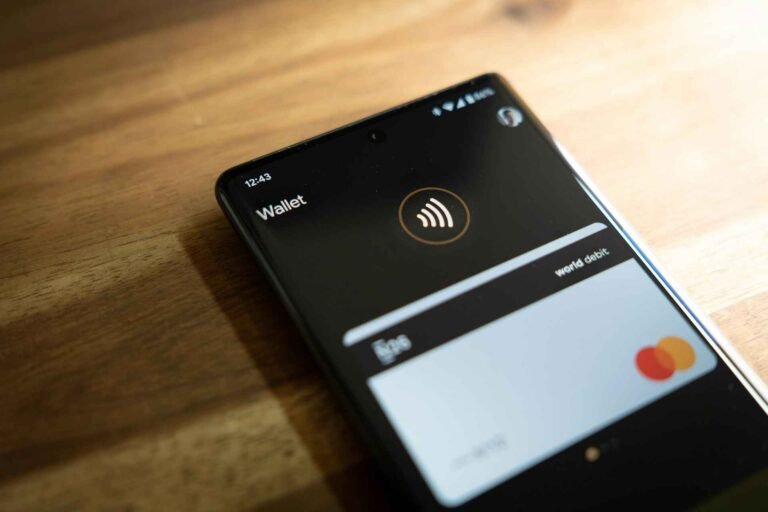
Available through the AliExpress iOS and Android apps respectively. Growing in Austria as contactless and digital wallet adoption increases.
Currency
AliExpress displays prices in euros for Austrian buyers, with MwSt (20%) included for sub-€150 orders. Austria has been in the Eurozone since 1999. No currency conversion friction. EPS and card payments settle in euros without additional conversion fees.
What to buy from AliExpress in Austria, and what to avoid
Austria’s e-commerce category preferences
The largest e-commerce sectors in Austria are clothing (€2.4 billion), electrical appliances (€1.3 billion), and furniture (€0.9 billion). Toys, sports, and clothing show the highest online penetration at 35%, 34%, and 30% respectively. Leisure, hobby, and DIY products are doing well too.
AliExpress’s strongest value categories align well with Austrian shopping behaviour.
Strong value categories for Austrian buyers:
Electronics accessories (Kabel, Ladegeräte, Handyhüllen, Kopfhörer, Smart-Home-Geräte). Hobby, craft, and DIY supplies (Bastelzubehör, Elektronikkomponenten, 3D-Druckfilament, Modellbau). Sports accessories and outdoor gear. LED lighting. Home organization and storage. Computer peripherals. Products from official brand stores (Anker, Baseus, Ugreen, Xiaomi, Govee).
Austrian context: Geizhals.at as your benchmark
Austrian buyers routinely compare prices on Geizhals.at before buying. Using Geizhals as a price benchmark before an AliExpress purchase is smart practice. If a product is genuinely cheaper on AliExpress even after calculating the full landed cost (product + 20% MwSt + potential carrier fee), you have a real deal. Sometimes Amazon.de or a local Austrian retailer is actually competitive when taxes are factored in.
Categories to approach carefully:
Clothing: Austrian/EU sizing doesn’t match AliExpress listings. Use centimeter measurements from the size chart, not size labels. Footwear: sizing is particularly unreliable. Electrical products: verify CE marking is explicitly stated. Austrian electrical standard is 230V/50Hz with Type F (Schuko) sockets, identical to Germany. CE marking is a legal requirement for electrical goods sold in Austria.
What to avoid:
Products where the price advantage disappears once you add 20% MwSt and potential carrier fees. Branded goods at prices too good to be true. Non-CE marked electrical products. For purchases above €150 from China where you’d face 60% landed cost uplift from taxes and fees: check Austrian or German retailers first.
How to buy safely on AliExpress from Austria: step by step
- Set the platform to German and EUR. AliExpress’s German-language interface (the same used for Germany) works perfectly for Austrian buyers. Set currency to EUR for transparent MwSt-inclusive pricing.
- Filter for EU warehouse stock first. “Versand aus Deutschland,” “Versand aus Polen,” or “Versand aus Europa.” EU warehouse stock eliminates import declarations, the double-MwSt risk, and from July 2026 the new EU per-item tariff. For purchases near €150, this filter is essential.
- Apply the Choice filter. Faster dispatch, better IOSS documentation compliance (which directly reduces the double-MwSt risk), 90-day free returns.
- For orders approaching or above €150: calculate the full landed cost. Product price + 20% MwSt (import VAT) + customs duty (0% to 12% by category) + carrier fee (€6 Österreichische Post, or €20-40 for DHL Express). That’s your real cost.
- Check CE marking on electrical goods. Explicitly stated in the product description. CE marking is Austria’s legal requirement for electrical equipment. If it isn’t there, don’t buy it.
- Vet the seller. Store age minimum 12 months, Item as Described score above 4.5, transaction volume on the specific product.
- Read buyer photo reviews. Real photographs from real buyers. Filter for European reviews for sizing and quality feedback relevant to Austrian conditions.
- Screenshot the listing before buying. Title, photos, specifications, delivery promise. Your documentation for any dispute.
- Pay with Klarna Pay in 30 Days, EPS, or PayPal. Klarna Pay in 30 Days for maximum pre-payment protection (receive before you pay). EPS for familiar Austrian banking integration. PayPal for independent 180-day buyer protection.
- Save your AliExpress MwSt receipt from the order confirmation. If Österreichische Post wrongly charges MwSt again, you’ll need this to prove double payment to AliExpress customer service.
- Note your buyer protection window in “Meine Bestellungen.” Set a reminder.
- Inspect before clicking “Bestellung erhalten.” This releases payment to the seller.
Tips for Austrian AliExpress buyers
Use Klarna Pay in 30 Days as your default first-purchase payment. Austria is one of only four European countries where this option is available on AliExpress. It’s the safest way to shop: goods arrive, you inspect them, then you pay within 30 days. If something is wrong, you have full Klarna buyer protection before any money leaves your account. For Austrian buyers new to the platform, this should be the standard approach.
Photograph the Österreichische Post collection notice if it asks for MwSt. The double-MwSt problem is documented and recoverable, but only if you have evidence. Before paying any fee the Post demands on a package where AliExpress already charged MwSt, photograph the notice and contact AliExpress customer service. The refund process works when properly documented.
EPS is underused by Austrian AliExpress buyers but ideal for regular shoppers. EPS lets you pay directly from your Austrian bank account via familiar internet banking, without entering card details on a foreign Chinese platform. For buyers who order regularly but are uncomfortable storing payment credentials on AliExpress, EPS is the natural Austrian solution.
Plan ahead of July 2026. The EU’s €3 per-item tariff effective July 1, 2026 applies to every item in every China-shipped sub-€150 order. For Austrian buyers who regularly buy multiple hobby or craft items in one order, this changes the economics noticeably. EU warehouse stock is unaffected. Stock up on regularly-used non-perishable items before the deadline, or shift toward EU warehouse sellers.
Shop during 11.11 and Black Friday with a strategy. Austria’s strong cross-border shopping culture means Austrian buyers are already comfortable with international promotions. AliExpress’s November 11 sale and Black Friday promotions generate genuine savings. Stacking Choice coupons on sale pricing, and timing purchases before the July 2026 tariff change, produces the best value.
Use Geizhals.at as a sanity check. Austria’s price comparison culture is one of Europe’s strongest. Before any AliExpress purchase, run a quick Geizhals search. If the Austrian or German market price (which already includes MwSt) is within 15% of AliExpress’s after-tax price, the domestic option is often worth it for faster delivery, easier returns, and Austrian consumer law protection that’s simpler to enforce.
For Vienna buyers: DHL Packstation is worth setting up. Vienna has dense DHL Packstation coverage. A free Packstation account gives you 24/7 locker pickup for all DHL-delivered AliExpress packages, eliminating the home delivery timing problem entirely. The setup takes five minutes at dhl.de/packstation.
Takeaway
Austria’s 83.9% AliExpress growth rate reflects a market that was underserved by the platform until recently. Austrian buyers are among Europe’s most experienced cross-border online shoppers, already comfortable buying from international platforms. AliExpress simply added another option at prices that domestic Austrian retail cannot match for many categories.
The fundamentals are clean for sub-€150 purchases: 20% MwSt collected at checkout, the checkout price is your final price, Österreichische Post or DHL delivers to your door or a collection point. Above €150, calculate the full landed cost. EU warehouse stock eliminates customs complexity entirely.
The Austria-specific thing to genuinely prepare for: the double-MwSt problem with Österreichische Post. It happens. The fix is documented. But it requires keeping your AliExpress MwSt receipt and being willing to work through customer service. Klarna Pay in 30 Days, Choice sellers, and EU warehouse stock all reduce the probability of encountering it.
Austrian consumer rights, the Rücktrittsrecht under EU law, and AliExpress’s own buyer protection collectively provide meaningful recourse when things go wrong. For the right purchases, at the right price, from the right sellers, AliExpress delivers genuine value that Austrian buyers are clearly finding compelling.
FAQ (Häufig gestellte Fragen)
Zahle ich MwSt auf AliExpress in Österreich? / Do I pay MwSt on AliExpress in Austria? Yes. Austria’s standard MwSt is 20%, collected at checkout by AliExpress for orders under €150 under the EU IOSS system. The checkout price is your final price. For orders above €150, MwSt and customs duties are collected by the carrier at delivery.
Was ist das Doppelbesteuerungsproblem? / What is the double-MwSt problem? Österreichische Post sometimes charges MwSt on arrival even when AliExpress already paid it at checkout. This happens when the package isn’t properly marked with the IOSS declaration. If this occurs: don’t pay without first contacting AliExpress customer service with both receipts. AliExpress has a documented refund procedure for double-charged MwSt.
Wie lange dauert die Lieferung von AliExpress nach Österreich? / How long does delivery take to Austria? EU or European warehouse stock: 3 to 7 business days. AliExpress Choice from China: 10 to 20 days. Standard shipping from China: 15 to 30 days. Express couriers: 5 to 10 days.
Kann ich mit Klarna oder EPS bei AliExpress bezahlen? / Can I pay with Klarna or EPS on AliExpress? Yes. Klarna (Pay Now, Pay in 4, Pay in 30 Days, Financing) is available for Austrian AliExpress customers. EPS online banking is also available, allowing payment directly from your Austrian bank account.
Welche Zustelldienste liefern AliExpress in Österreich? / Which carriers deliver AliExpress packages in Austria? Österreichische Post (39% of e-commerce deliveries), DHL (26%), and DPD (20%) are the main carriers. For missed deliveries, Post packages can be collected at Postfilialen or Post-Partner shops; DHL packages at Packstations.
Was sind meine Verbraucherrechte? / What are my consumer rights on AliExpress? Austrian and EU consumer law provides a 14-day Rücktrittsrecht (right of withdrawal) from delivery, without giving any reason. AliExpress Choice offers 90-day free returns. For unresolved disputes, Austria’s Arbeiterkammer (ak.at) and Verein für Konsumenteninformation provide guidance.
Was ändert sich ab Juli 2026? / What changes from July 2026? The EU approved a fixed tariff of €3 per item on all goods under €150 entering the EU from non-EU countries, effective July 1, 2026. This applies per item, not per package. EU warehouse stock is completely unaffected.
Help a Friend Save Money: