
Most people buy a charger once and never think about it again. Then they’re stuck with the 5W brick that came in the box five years ago, wondering why their iPhone takes three hours to fill up. Ugreen’s Nexode GaN charger lineup exists for exactly this situation: you need something faster, smaller, and more capable than whatever’s currently on your desk, without spending $50 on an Apple-branded brick that does less.
This guide covers every Ugreen GaN charger in the Nexode series, what the technology actually means in plain terms, and which model makes sense for which type of person. It’s not a ranking. It’s a proper breakdown so you can pick once and stop thinking about it.
What GaN Actually Means (Skip This If You Already Know)
GaN stands for gallium nitride. It’s a semiconductor material that replaced silicon in high-performance chargers around 2018. The difference matters for one practical reason: GaN runs cooler than silicon at equivalent wattages, which lets manufacturers build smaller chargers without the heat problem that makes cheap chargers fail or throttle.
A traditional silicon 65W charger is roughly the size of a bar of soap. A GaN 65W charger from Ugreen fits in your palm with room to spare. Same power output, less heat, smaller form factor. That’s the whole story.
There’s no catch in the basic premise. GaN chargers are genuinely more efficient. The trade-off is price, GaN costs more to manufacture than silicon but the gap has narrowed significantly on AliExpress, where Ugreen sells its Nexode lineup at prices that make the premium essentially irrelevant.
One thing worth understanding: GaN doesn’t automatically mean fast. A 20W GaN charger is still a 20W charger. What GaN gives you is efficiency and size at any given wattage. The actual charging speed depends on the wattage rating, the USB Power Delivery (PD) standard the charger supports, and whether your phone supports PD at all.
The Nexode Lineup: Every Model, What It Does, Who It’s For
Ugreen’s Nexode series covers everything from a compact single-port 30W charger to a five-port 300W desktop unit. The lineup is more coherent than it looks. Each model targets a specific use case, and choosing the wrong one usually means either overspending or under-powering.
Here’s the full picture.
The Nexode 30W
Who it’s for: iPhone users who charge one device at a time and want something small.
The 30W Nexode is a single USB-C port, compact, foldable plug design. It sits right at the sweet spot for iPhone 15, 16, and 17 users. Those phones max out at 27–30W wired charging speed, so a 30W charger hits their ceiling exactly. Anything above 30W on a single iPhone delivers the same speed, you’re just paying for wattage you won’t use on this device.
It does not support PPS (Programmable Power Supply), which means Samsung users should skip it. But for iPhone-only households, it’s the most sensible entry point in the lineup.
Price on AliExpress: approximately $12–15 USD / £10–12 GBP / $17–20 CAD / $18–22 AUD / €11–14 EUR.
The Nexode 65W
Who it’s for: Anyone with a phone and a laptop, or someone who just wants one charger for everything.
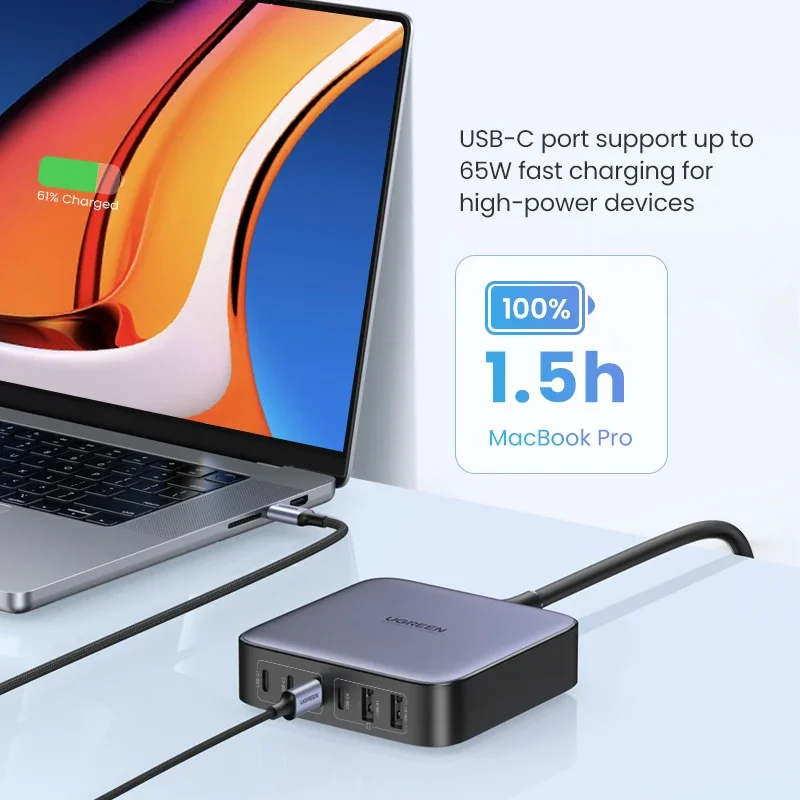
This is the model I’d push most people toward. Two USB-C ports, compact GaN design, foldable plug, 65W total output. It supports PPS at up to 45W, which covers Samsung Galaxy S-series fast charging. It covers iPhone fast charging easily. And it will charge most USB-C laptops such as MacBook Air, ThinkPad, smaller Dell XPS models at full or near-full speed.
The key behaviour to understand: when both ports are in use simultaneously, the 65W splits between them. Port 1 typically gets priority (the top port on most Ugreen chargers). In practice, phone + laptop charging at the same time usually gives the phone 20–25W and the laptop 40–45W. That’s still fast. It’s not the same as dedicated single-device charging, but for a travel charger that’s replacing two separate bricks, it’s a meaningful upgrade.
Price on AliExpress: approximately $18–22 USD / £15–18 GBP / $24–28 CAD / $26–30 AUD / €17–20 EUR.
The Nexode 100W
Who it’s for: Multi-device users, remote workers, people who charge a laptop and two phones at a desk.
Three USB-C ports. 100W total. PPS support. This is a travel-focused charger that replaces the entire charging setup for most people who carry a laptop. A 65W MacBook Pro, an iPhone, and AirPods can all run off this simultaneously.
The power distribution logic matters here: at full load with three devices, the output splits intelligently across ports, prioritising the highest-draw device. In practice, a laptop pulling 60W + two phones pulling 20W each is right at the ceiling, and the charger handles it without throttling in normal conditions.
It’s physically small for 100W. About the size of a large Apple Watch charger cube. That size is the whole point, it replaces three cables and three wall adapters with one unit.
Price on AliExpress: approximately $32–38 USD / £26–30 GBP / $42–48 CAD / $46–52 AUD / €29–34 EUR.
The Nexode 145W
Who it’s for: Power users with a gaming laptop, or anyone who needs sustained high-wattage output at a desk.
Two USB-C ports plus one USB-A port. 145W total. This one crosses from “compact travel charger” into “desktop power brick” territory. It’s heavier and physically larger than the 65W or 100W units. That’s the honest trade-off.
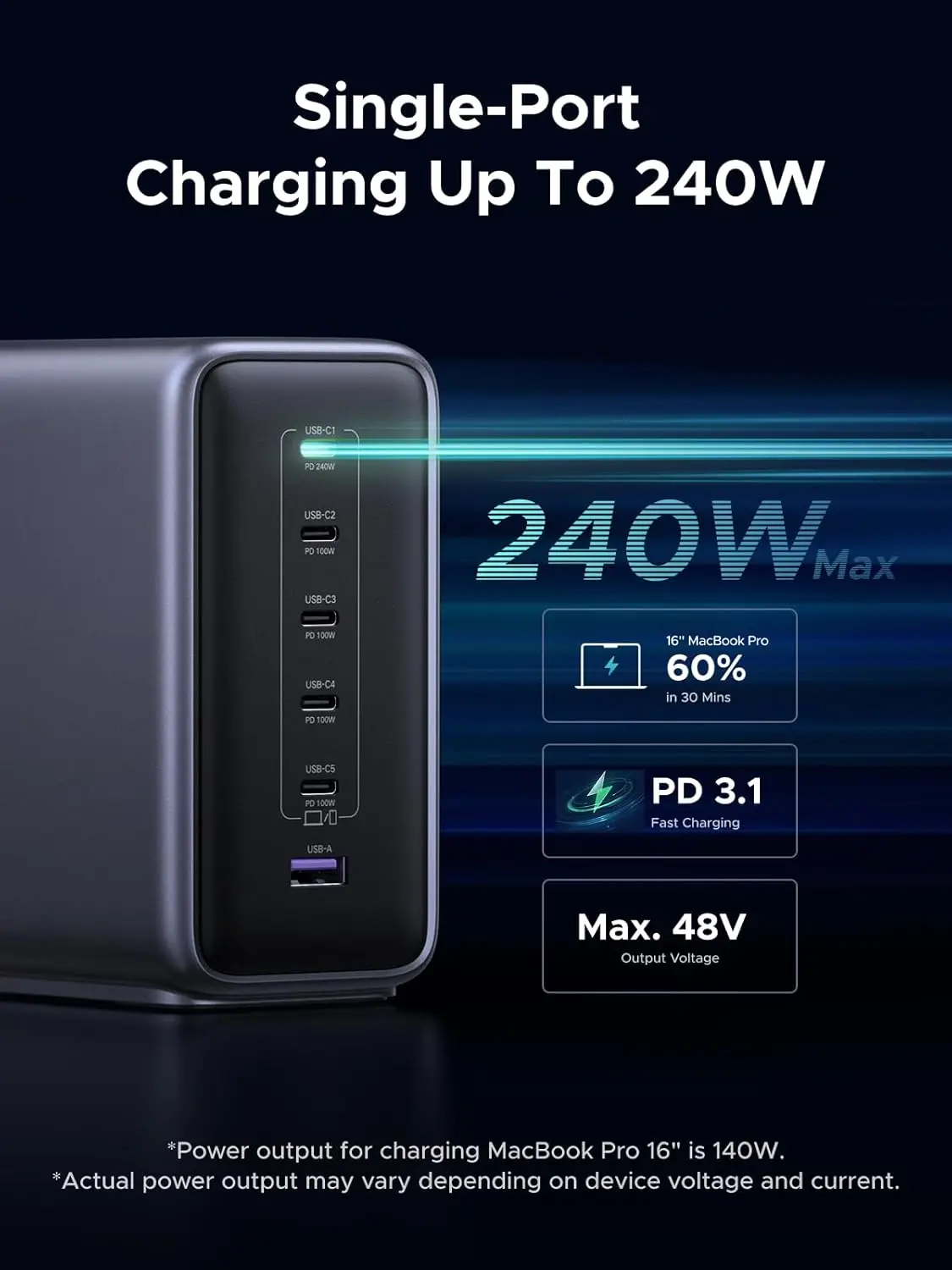
Where it earns its place: gaming laptops and high-performance USB-C laptops that need 100W+ to charge properly under load. A MacBook Pro 16″ drawing 140W at full tilt. A Dell XPS 15 pushing 130W. These devices won’t fast-charge from the 65W or even the 100W at peak CPU/GPU load. The 145W covers them.
The USB-A port adds compatibility for older devices and cables, which matters for households running a mix of new and older tech.
The Nexode 200W
Who it’s for: Households with multiple power users, small offices, anyone who wants one outlet to handle everything.
Six ports: three USB-C and three USB-A (models vary slightly). 200W total output. This is a desk charging station, not a pocket charger. It doesn’t fold. It stays put.
The honest use case: a family setup where two laptops, two phones, and a tablet need to charge simultaneously from the same power bar. Or a desk where you want every device done before you leave in the morning, no negotiating over sockets.
It’s harder to justify for a solo user. The 100W handles most individual setups just fine. The 200W earns its price when you’re managing multiple devices or users and want the whole thing solved in one purchase.
The Nexode 300W
Who it’s for: People who already know exactly why they need 300W.
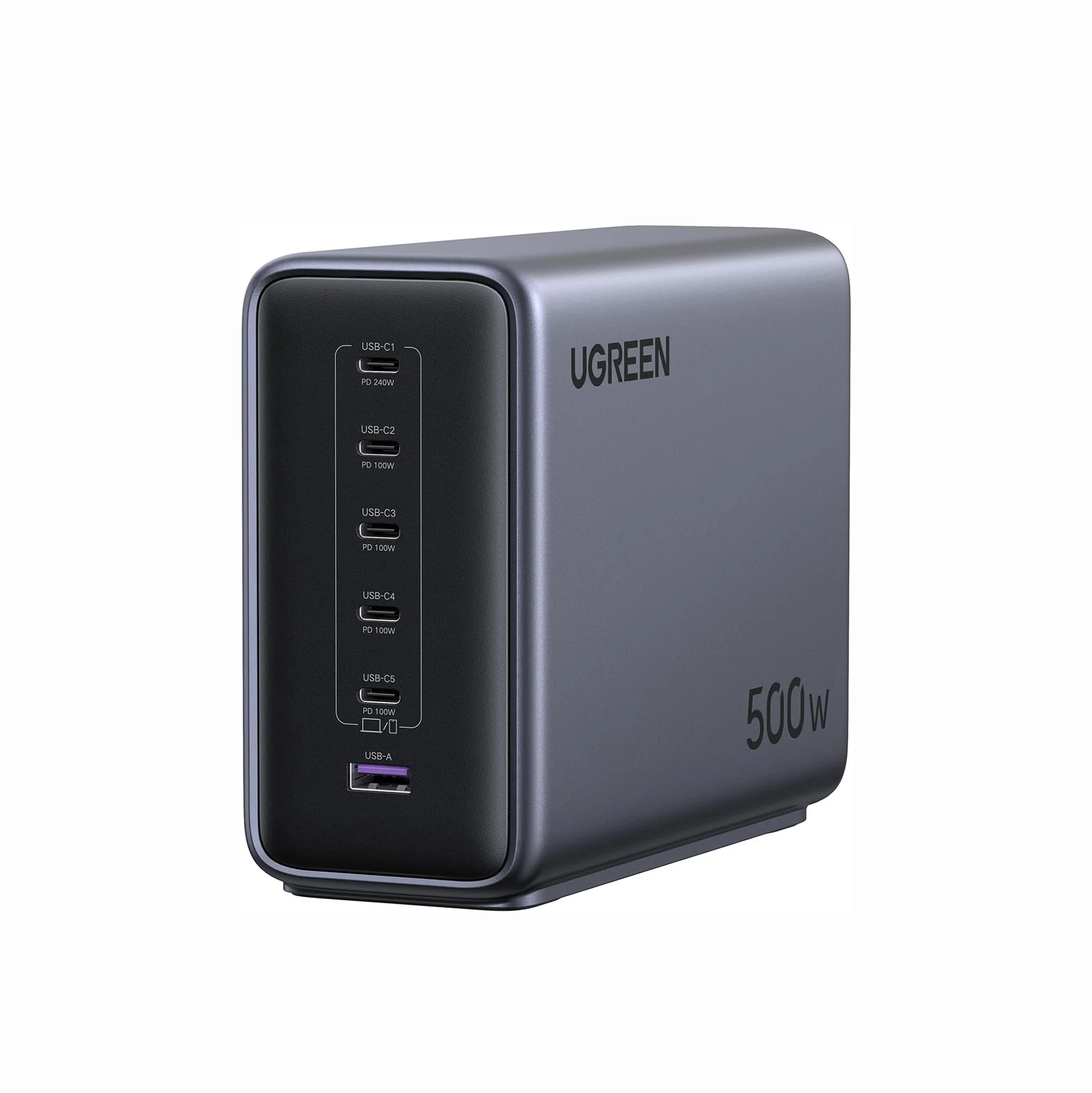
Five ports. 300W total. Desktop form factor. This is at the far end of what most individuals would ever need from a phone-adjacent charger. It’s the right answer for studio setups, small workplaces, or anyone running dual high-wattage laptops plus peripherals from a single station.
The Nexode 300W also holds the distinction of being one of the highest-output GaN chargers commercially available at the consumer level. Ugreen released the world’s first 300W charger commercially in this period. If you’re reading a guide to pick a phone charger, this is probably not your model. But it’s worth knowing it exists.
The Nexode Retractable 65W
Who it’s for: Travellers and minimalists who forget cables.
One USB-C port, 65W output, PPS support and the charging cable is built into the charger body on a retractable mechanism. You pull it out when you need it, it retracts back in when you don’t. No separate cable to forget, lose, or wrap badly.
It’s clever. The cable is USB-C, which covers iPhone 15+ and most modern Android devices. The actual charge speed matches the standard Nexode 65W.
The limitation is obvious: if the built-in cable degrades, you can’t just swap it. And single-port means you’re charging one thing at a time. For travellers who want the smallest possible footprint, it’s a strong choice. For desk-based users with multiple devices, the standard 65W or 100W is the better option.
Full Nexode Spec Comparison
| Model | Max Output | Ports | PPS | GaN | Form Factor | Best For |
|---|---|---|---|---|---|---|
| Nexode 30W | 30W | 1× USB-C | No | Yes | Compact, foldable | iPhone-only users |
| Nexode 65W | 65W | 2× USB-C | Yes (45W) | Yes | Compact, foldable | Phone + laptop |
| Nexode 100W | 100W | 3× USB-C | Yes | Yes | Travel compact | Multi-device travel |
| Nexode 145W | 145W | 2× USB-C + 1× USB-A | Yes | Yes | Desktop | High-wattage laptops |
| Nexode 200W | 200W | 3× USB-C + 3× USB-A | Yes | Yes | Desktop station | Multi-user household |
| Nexode 300W | 300W | 5 ports | Yes | Yes | Desktop station | Studio / office |
| Nexode Retractable 65W | 65W | 1× USB-C (built-in cable) | Yes | Yes | Compact, foldable | Solo travellers |



Who Should Buy Which Model
The table above shows the specs. This section makes the actual decision for you.
You have an iPhone and nothing else to charge at your desk. Get the Nexode 30W. It hits your phone’s maximum wired charging speed. You won’t get more from a more expensive model on this device.
You have an iPhone and a MacBook Air or similar 13-inch laptop. Get the Nexode 65W. One port for each device, one cable for each device, one charger instead of two.
You travel with a 15-inch or larger laptop plus a phone. Get the Nexode 100W. The 65W will still charge both, but larger laptops draw more wattage under load, and the 100W gives you headroom without sweating the maths.
You have a gaming laptop or a MacBook Pro 16″. Get the Nexode 145W. These machines pull 100W+ at peak and genuinely need the headroom. The 65W will charge them, but slowly, and not at all if they’re running a demanding task while plugged in.
You have a family or a small team all charging from the same desk. Get the Nexode 200W. The price jump is real, but so is the relief of not having four people rotate through two sockets.
You hate carrying cables when you travel. Get the Nexode Retractable 65W. The built-in cable is one fewer thing to forget at hotel checkout.
GaN vs Regular Charger: Does It Actually Matter?
For most people buying their first GaN charger: yes, noticeably. The size difference between a GaN 65W and a traditional silicon 65W charger is significant enough to matter in a bag. The heat difference under sustained load is real, silicon chargers at 65W get warm enough to be uncomfortable. GaN stays cooler.
The efficiency difference in electricity consumption is marginal at the household level. This is not a meaningful energy-saving purchase. Buy GaN because it’s smaller and more reliable, not because of electricity bills.
One honest caveat: cheap, unbranded GaN chargers exist and some are problematic. They use the GaN label without proper USB-IF certification, and can deliver inconsistent voltages that don’t match the USB PD spec. Ugreen’s Nexode line is USB-IF certified. That certification means the power delivery negotiation is correctly implemented, the charger and your phone agree on the correct voltage before power flows. That matters for battery longevity, not just charging speed.
iPhone Charging Speed Reference
If you’re primarily charging an iPhone and want to know exactly what wattage you need, this is the short version.
| iPhone Model | Max Wired Charging Speed | Charger Recommendation |
|---|---|---|
| iPhone 12 / 13 | 27W | Nexode 30W or 65W |
| iPhone 14 | 27W | Nexode 30W or 65W |
| iPhone 15 / 15 Pro | 27W | Nexode 30W or 65W |
| iPhone 16 / 16 Pro | 30W | Nexode 30W or 65W |
| iPhone 17 (estimated) | 30–45W | Nexode 65W |
A 65W charger does not fast-charge an iPhone faster than a 30W charger. The iPhone draws what it draws, the extra wattage goes nowhere. The reason to get the 65W over the 30W is because the 65W also covers laptops and Android devices, making it a genuinely universal charger. For a pure iPhone-only setup, the 30W is the correct choice.
Samsung Fast Charging: What You Need to Know
Samsung’s Super Fast Charging uses PPS (Programmable Power Supply), which is a different voltage negotiation protocol from standard USB PD. Not all USB-C chargers support PPS.
The Nexode 65W, 100W, 145W, 200W, and Retractable 65W all support PPS. The 30W does not.
For Galaxy S25 and S24 series phones, which support 45W PPS charging, the Nexode 65W delivers that speed. For Galaxy A-series phones that top out at 25W PPS, the 65W handles those too.
If you have a Samsung phone, the Nexode 30W is the one model to avoid. Everything above it covers you.
Buying from AliExpress: What to Know Before You Order
Ugreen has an official store on AliExpress. Buying from the official store matters for one practical reason: the 2-year warranty only applies to units purchased from authorised channels. Off-brand Ugreen listings with suspiciously low prices are generally grey-market stock without that coverage.
The official store listings include a QR code on the packaging that verifies authenticity. Check it when your order arrives.
Shipping times by market:
- US: AliExpress Choice shipping typically 7–15 business days. Occasionally faster with US warehouse stock.
- UK: 10–18 business days standard. Post-Brexit, all AliExpress purchases include VAT at point of sale for orders under £135. No customs surprises on Nexode charger orders, which all fall under this threshold.
- Canada: Allow 14–21 business days. Canadian customs CBSA duty threshold is CAD $20 for commercial goods, meaning most single charger orders will attract duty. Factor approximately 5–10% import duty plus applicable sales tax.
- Australia: 12–18 business days. GST applies to all overseas purchases since 2018, collected at checkout. No additional surprise at the door.
- EU: 10–15 business days for EU warehouse stock. VAT collected at checkout via IOSS for registered sellers. Ugreen’s official store is registered, so no additional customs fees.
Go To UGREEN Official Store On AliExpress
How Ugreen Compares to Anker and Belkin
The two most common comparisons people make when buying a GaN charger: Anker and Belkin. Both are legitimate alternatives. Here’s the honest picture.
Ugreen vs Anker: The Anker 735 (65W, two USB-C ports) is comparable to the Nexode 65W in spec and certification. On Amazon, it’s approximately $36–45 USD. The Nexode 65W on AliExpress runs $18–22 USD. That’s a 40–60% price gap for identical USB-IF certified performance. Anker’s advantage is Amazon Prime shipping and a well-established customer service operation. If your charger fails under warranty, Anker’s replacement process is faster and less friction-heavy than Ugreen’s email-based system.
Ugreen vs Belkin: Belkin’s GaN chargers sit at premium price points and have Apple Store placement. Their 65W two-port GaN charger runs $55–65 USD. There’s no technical justification for that gap over the Nexode 65W. Belkin’s premium is brand positioning, not charging performance. The Nexode 65W will charge your iPhone at the same speed as Belkin’s equivalent, for a third of the price.
The honest take: if you want the charger today and want zero friction on a warranty claim, Anker from Amazon is a reasonable choice. If you can wait 10–14 days for delivery and want to keep more money, Ugreen from AliExpress is the better value at every wattage tier.
What Comes in the Box
The Nexode chargers ship with the charger unit only. No cable included. This catches people out occasionally.
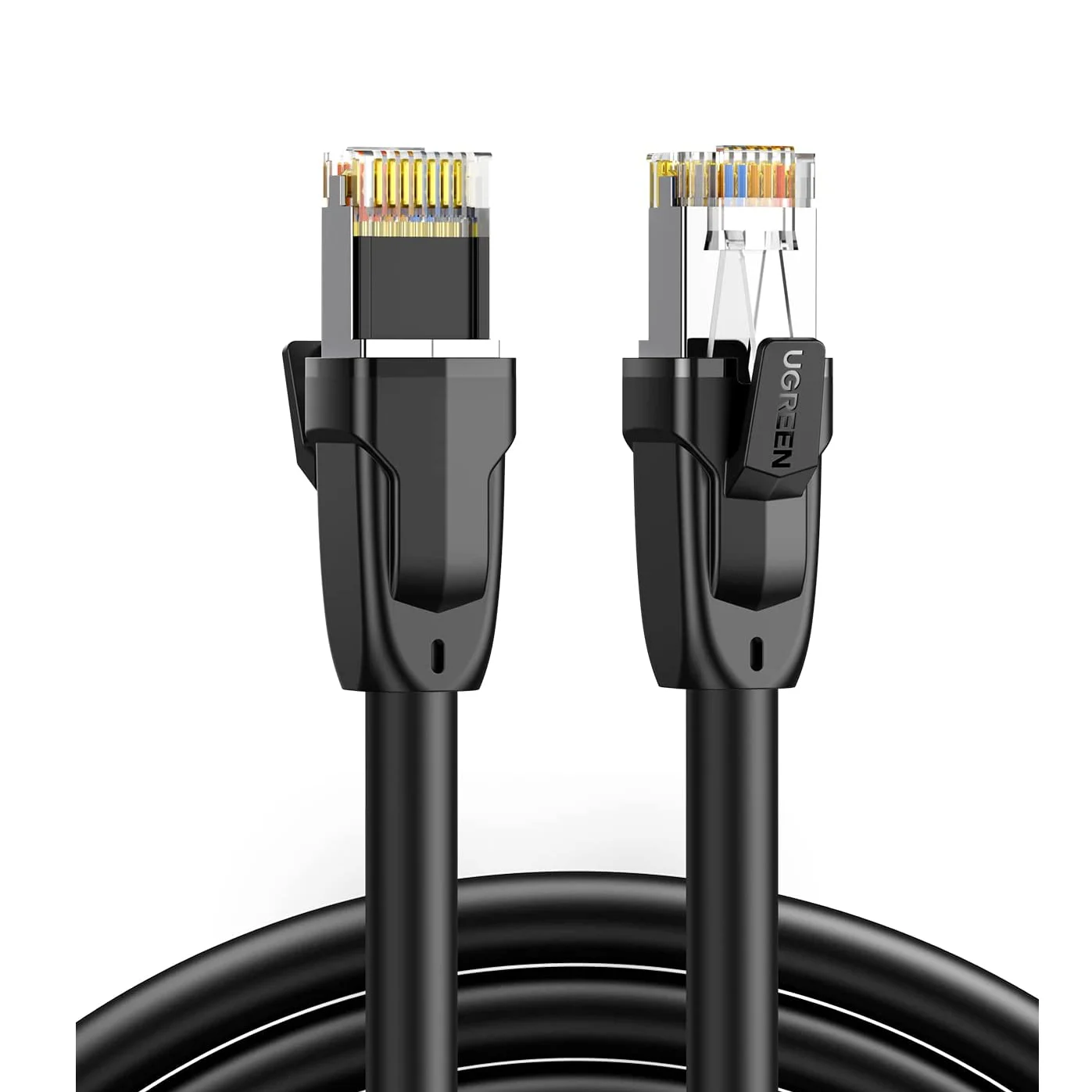
For iPhone 15, 16, or 17 users: you need a USB-C to USB-C cable. Ugreen sells braided 100W USB-C cables that pair well with the Nexode lineup. The 65W and 100W chargers support up to 65W and 100W cable output respectively, but the cable must also be rated to match. A cheap USB 2.0 cable will cap your charge speed at 15W regardless of the charger.
For Samsung users: same situation. USB-C to USB-C cable rated for your phone’s maximum wattage. For 45W PPS charging, you specifically need a cable rated for 60W or above.

![UGREEN Bluetooth 5.4 Aux Car Adapter, [Enhanced Connection & Noise Cancellation],Bluetooth Aux Receiver with Nylon Braided Cable](https://ae-pic-a1.aliexpress-media.com/kf/S87102727cf72427aaf7756d139f51955L.jpg)

The Verdict on the Nexode Lineup
Ugreen’s GaN charger range is competitive at every tier. The 65W is the strongest value point in the lineup for most people: two ports, PPS support, compact design, and a price that’s genuinely hard to argue with when you compare it against Anker or Belkin equivalents doing the same job at twice the price.
The 30W is the right buy if you truly only need to charge an iPhone and nothing else. The 100W covers multi-device travel setups cleanly. The 145W and above are for specific power requirements, not general use.
None of them are perfect. The warranty process is slower than Amazon brands. Delivery takes longer than Prime. And if you’re in Canada, factor in import duties before comparing the AliExpress price to a local alternative.
But if your current charger is the 5W or 12W brick from three phones ago, almost any Nexode model will be a meaningful improvement. The 65W is a reasonable place to start.
Help a Friend Save Money: